Succession Weekly Brief
The Insurance Market Just Split in Two: What the 2026 Bifurcation Means for Your Renewal
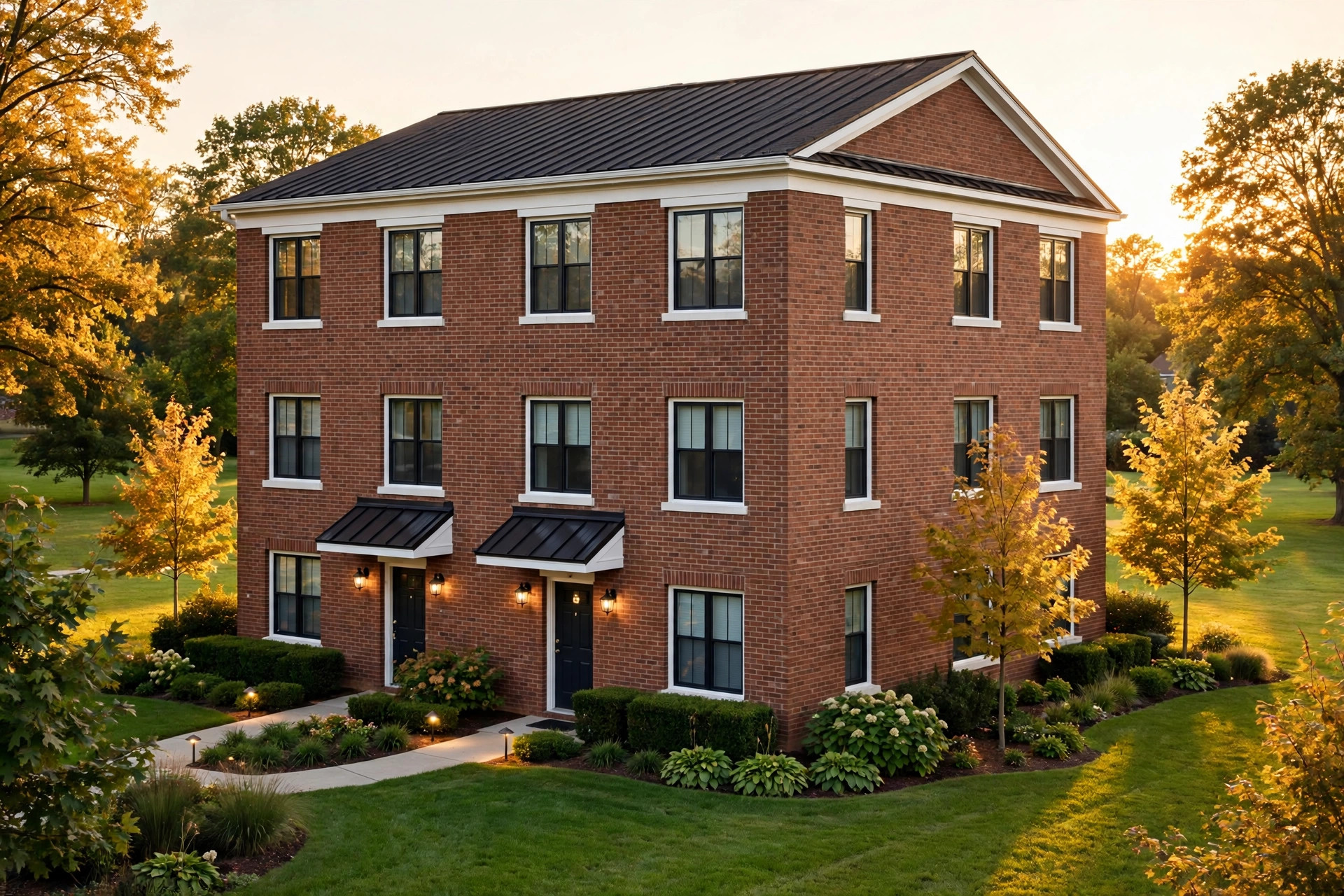
Not Hard, Not Soft — Bifurcated
For four years, the independent landlord's insurance renewal was a predictable event: the premium went up, the options narrowed, and the broker's explanation was the same one you'd heard the year before. That uniform experience is over. The 2026 multifamily insurance market has split in two — and which half your buildings land in is now the single most important variable in your operating budget.
The evidence arrived this month from Multi-Housing News, drawing on PwC principal Veronika Torarp and Grant Allen, senior vice president for real estate practice at Hub International. Some owners will see rates drop this year; others will see them rise. Even in California's high-risk environment, some large insurers that were approved to increase their rates by about 7 percent in 2026 are actually decreasing rates by 9 percent across the board, with Southern counties seeing decreases approaching 15 percent. Allen reports a softening of 10 to as much as 30 percent on property premiums for quality construction and owners who have taken steps to mitigate future losses.
The standout data point comes from South Florida, via Yardi platform figures reported in late September: multifamily property insurance expenses fell 16 percent over the twelve months ended August 2026 compared with the prior twelve-month period. Miami-Dade dropped to $1,369 per unit, down 17.5 percent year-over-year; Broward to $1,250, down 15 percent; Palm Beach to $1,154, down 10.8 percent; and Martin and St. Lucie counties to $1,042, down 21.1 percent. That is a genuine market turn, not a rounding error.
The Mechanism Behind the Discount
The discounts are not arbitrary. Carriers recapitalized through the hard years — higher premiums, higher deductibles, lowered limits, and revalued replacement costs — and are now profitable again. Florida's experience is instructive: many carriers returned to the state when rates were peaking to take advantage of the high premiums, and those same carriers are now cutting rates to compete and gain market share, according to Newmark vice chairman Hampton Beebe. In September alone, Florida's Office of Insurance Regulation approved rate reductions for four carriers — two at 10.4 percent, plus 4.1 and 3.2 percent — affecting more than 62,000 policies. Citizens Property Insurance Corporation, the state-backed insurer of last resort, received approval for an average 8.8 percent statewide reduction on homeowners multiperil policies for 2026, with rates applying to new policies effective July 1 and to existing policies as they renew.
But the market is handing out discounts on one condition: proof that the building earns them. Underwriting is more disciplined than ever. Underwriters are checking wildfire scores, construction type, roof age, and wiring — and owners with hardened buildings are the ones seeing the softening. A Hub International client with a large multifamily portfolio that had suffered a loss from the Pacific Palisades fire achieved a 25 percent reduction across its entire portfolio post-fire, on the strength of quality construction. Underwriters are also talking to lenders directly: the insurance premium has become a key driver of what the bottom line of an investment looks like, which means your renewal can now move your refinancing math.
The Other Half of the Market
None of this helps the buildings that haven't been hardened. Older Class B and C assets that have not seen substantial improvements — unremediated aluminum wiring, stab-lock breakers, aged-out roofs — continue to face significant underwriting pressure, because the losses on those properties are, as Allen puts it, inevitable. Deductibles have risen across the board: average deductibles increased 22 percent in 2025 alone, and over the past year both premiums and deductibles rose an average of 20 percent, up to 40 percent in high-risk markets, with deductibles doubling or tripling in markets that experienced a major weather event. Many insurers also lowered their liability limits, so covering a property's full replacement cost may now require multiple insurers.
Keep perspective, too. Premiums peaked for multifamily in 2023 and have declined since — but rates remain well above where they were seven years ago. One example cited by Newmark: a 1988-vintage property whose premiums were $500 per unit in 2017 peaked at $2,000 in 2023 and have since dropped roughly in half, to about $1,000. And Federal Reserve research on apartment building loan data found real, inflation-adjusted insurance costs per unit rose roughly 51 percent between 2020 and 2024. The trend is favorable. The level is not.
The Renewal Playbook
If your policy renews in the next two quarters, treat the renewal as a project, not a signature. The owners earning 10–30 percent reductions are the ones who showed up prepared.
Start 120 days out. Underwriters are now proactively reaching out to brokers with decreased pre-renewal options to lock in business before competitors do — but only for accounts worth keeping. Give your broker time to shop the account; a renewal that starts sixty days out gets one quote.
Document every hardening investment. New roof, impact-rated windows, electrical remediation, copper wiring replacing aluminum, sprinkler and fire-system upgrades, drainage work — each one is a line item in an underwriter's model only if you document it. Photos, contractor invoices, permits, inspection certificates. Resilience that lives only in your memory prices at zero.
Get the formal inspections. Several states tie mandatory discounts to verified mitigation. Florida's My Safe Florida Home program provides grants for hurricane-hardening upgrades — impact windows, reinforced roofs — plus free wind-mitigation inspections, with homeowners reporting up to 50 percent savings on hurricane coverage. Louisiana offers grants of about $10,000 for roof replacement. Check what your state offers; these programs exist precisely because carriers discount the results.
Price the deductible, not just the premium. A 15 percent premium reduction paired with a doubled deductible can leave you worse off on a single claim. Model your total cost of risk — premium plus expected out-of-pocket at your loss frequency — before celebrating the headline number.
Check your insurable value. In Florida, some properties were valued 20 to 30 percent below replacement cost, and revaluations to current values drove up costs even where rates fell. Make sure your valuation reflects reality: underinsurance is a claim-day catastrophe; overinsurance is money you light on fire monthly.
Coordinate with your lender early. Because underwriters are speaking directly with banks, a surprise at renewal can ripple into your financing. If you're refinancing or renewing a DSCR loan, the insurance line sits in the middle of your debt-service math — bring your broker's preliminary indication to the lender conversation, not after it.
The honest uncertainty: this softening is capacity-driven, not guaranteed. A severe hurricane season or a string of wildfire losses can snap the market back, and the capacity sitting in the excess and surplus lines market can exit as fast as it entered. For a 5-to-20-unit operator, the durable move is not betting on cheaper premiums — it's making the building cheap to insure, documented so thoroughly that any carrier in any market can see it. In a bifurcated market, the building is the argument. Make it a good one.
SOURCES
- "Why Insurance Costs Are No Longer High All Over," Multi-Housing News (October 2026) — PwC principal Veronika Torarp; Grant Allen, SVP real estate practice, Hub International; Hampton Beebe, vice chairman, Newmark.
- "South Florida Multifamily Market Gains Momentum as Rents Rise and Insurance Costs Fall," MIAMI REALTORS® (September 29, 2026) — Yardi platform insurance-expense figures.
- "Florida Home Insurance Rates Are Falling: What Rental Property Owners Should Know," Bianchi Realty and Property Management (September 2026) — Florida Office of Insurance Regulation filings; Citizens Property Insurance Corporation reduction.
- "Why Multifamily Owners' Safety Investments Aren't Showing Up in Their Premiums," Carrier Management (August 2026) — Federal Reserve apartment loan data; 2026 ULI Resilience Summit findings.