Succession Weekly Brief
The Roof Decision: Repair vs. Replace, and How to Make the Call Before Winter
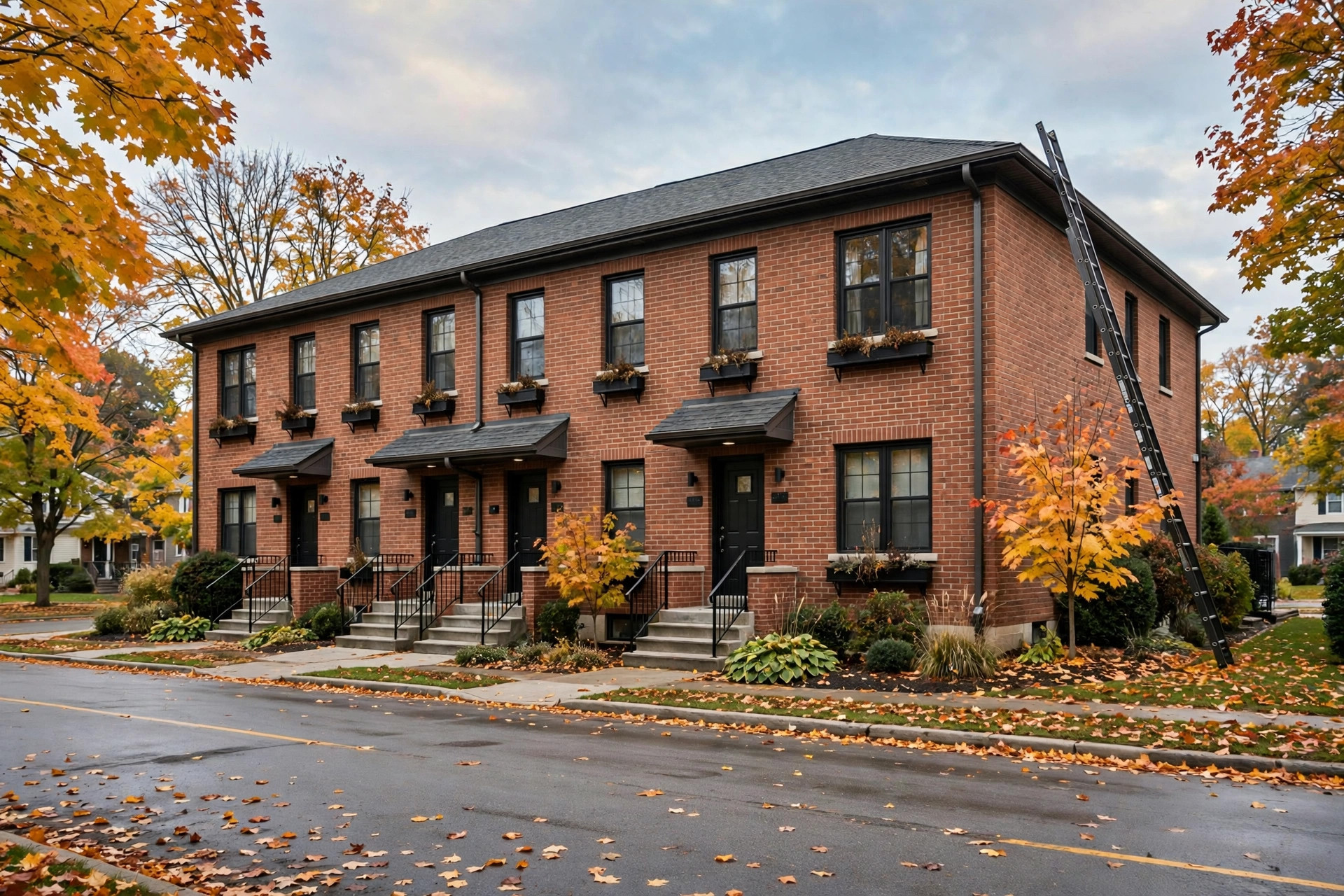
The Most Expensive Roof Is the One You Replace Twice
Every small-portfolio landlord knows the pattern. A leak appears over a second-floor unit. A roofer patches it for a few hundred dollars. Six months later, another leak, another patch. By the third visit, the cumulative repair bill is approaching a third of what a full replacement would have cost — and the roof is still failing. The patch cycle feels like saving money; it is usually the most expensive option on the menu. October is the right month to make the call, while there is still a window to get a replacement done before freeze season.
What a Replacement Actually Costs in 2026
Start with the numbers, because the decision is mostly arithmetic. This Old House's 2026 cost guide puts a 2,000-square-foot asphalt-shingle roof at an average of about $15,439, and a 1,500-square-foot roof at about $11,631. Redfin's 2026 figures bracket the same territory: $4 to $11 per square foot, with most homeowners spending between $8,000 and $30,000. Labor accounts for roughly 60 percent of the total — about $2 per square foot — plus permits typically running $100 to $1,000 and old-roof removal at $1 to $5 per square foot (ConsumerAffairs, 2026).
Metal changes the equation. In hail-prone Northern Colorado, asphalt installs run roughly $4.50 to $8 per square foot against $9 to $16 for metal. The premium buys lifespan: industry figures put asphalt shingle roofs at 15 to 30 years, metal at 40 to 70, and tile or slate at 50 to 100. So the honest comparison is price per year of service, adjusted for how long you plan to hold the building.
The Five-Check Framework
1. Age against expected life. An asphalt roof at year 12 with a leak is a repair candidate. The same roof at year 22 with its third leak in two years is telling you something. Industry practice puts asphalt shingles at 15 to 25 years in real-world conditions, with ventilation, climate, and storm history deciding where a given roof lands. Past the midpoint of expected life, every repair dollar buys less remaining service.
2. Scope of damage. Isolated damage — a failed pipe boot, a valley leak, a handful of wind-blown tabs — is a repair. Damage spread across multiple slopes and valleys is a system failure wearing a repair's clothing. Damage confined to under about 15 percent of the roof surface is a spot-repair situation; widespread deterioration is a replacement situation.
3. Decking integrity. This is the check that decides the matter, and the one most often skipped. Soft or spongy decking, active rot, daylight visible through roof boards, or sagging rafter lines mean the structure under the shingles is compromised. No patch fixes rotten decking.
4. The cost ratio. Two rules of thumb bracket the decision: a repair costing more than about 30 percent of full replacement deserves a hard look at replacing instead; another puts the threshold closer to 40 percent. The exact number matters less than the principle — spending a third or more of replacement cost on an aging roof buys a patched system with a short remaining life and no new warranty.
5. The insurance picture. This connects directly to last week's brief on the bifurcated insurance market: underwriters are checking roof age, and an aged-out roof is one of the fastest routes to the expensive half of the market. A new roof with documentation — permits, invoices, inspection certificates — is one of the few capex items that can move your premium at renewal.
The Reserve Mistake That Creates the Patch Cycle
The patch cycle rarely starts with a bad decision. It starts with no reserve. Flat rules of thumb — setting aside 1 percent of property value a year, or assuming operating expenses consume half of gross rent — treat a 25-year-old roof and a brand-new one identically. The useful approach is component forecasting: inventory each major component, estimate its remaining useful life as a range, and budget off the early end of the range. A roof with 4 to 7 years of remaining life gets funded as if it has 4.
The Tax Distinction
One more factor belongs in the math. Under IRS Publication 527, amounts that keep a property in ordinary operating condition are generally deductible repairs in the year paid, while amounts that restore, improve, or adapt the property — which a full roof replacement typically is — must be capitalized and depreciated over the asset's class life. When a project mixes repair and capital elements on the same invoice, the allocation rules get specific fast — worth a conversation with your tax professional before the work starts.
The Decision, Stated Plainly
Repair when the damage is isolated, the deck is sound, the roof is well within its expected life, and the repair costs a small fraction of replacement. Replace when damage is widespread, the deck is compromised, the roof is past mid-life, or the repair quote reaches a third or more of replacement cost. And replace on your schedule: a roof replaced in October is a project; the same roof replaced in January, after an ice dam finds the weak spot, is a crisis with a tenant's ceiling involved.
The honest uncertainty: no framework removes judgment. Two roofs of the same age in the same city can be in very different condition, and a roofer who sells replacements has an incentive to recommend one. Get the inspection — attic included, with photos — and a second quote on any job over a few thousand dollars. The cheapest roof is the one you replace once, on your schedule, with documentation that earns its keep at insurance renewal.
SOURCES
- This Old House 2026 cost guide (via The Top Selected, September 2026) — asphalt-shingle replacement averages: $15,439 for 2,000 sq ft; $11,631 for 1,500 sq ft; ~$5,117 per 1,000 sq ft.
- Redfin, "Does a New Roof Increase Home Value?" (2026) — replacement typically $4–$11 per square foot; most homeowners $8,000–$30,000.
- ConsumerAffairs, "Cost to Replace a Roof (2026)" — asphalt average ~$11,500; labor ~60% of total, ~$2 per sq ft; permits $100–$1,000; removal $1–$5 per sq ft.
- "Roof Replacement Costs in Northern Colorado: A 2026 Guide" — asphalt $4.50–$8 per sq ft installed; metal $9–$16 per sq ft.
- Auben Realty, "CapEx Planning for Rentals" (October 2026) — component forecasting vs. flat rules; ~40% repair-to-replacement threshold; IRS Publication 527 repair vs. capitalization distinction.
- Urban Splatter, "The Comprehensive Guide to Roof Asset Management" (October 2026) — damage-scope framework; decking integrity as the decisive check.
- Industry lifespan data (via RAKE ML and The Inspiration Edit, 2026) — asphalt 15–30 years; metal 40–70 years; tile/slate 50–100 years.